





Tread Lightly, Explore Fully: Sustainable Shoulder Season Adventures in Canmore & Banff
We’ll let you in on a little-known secret… shoulder season is an ideal time to visit the Canadian Rockies. Fewer crowds, moodier skies, and trails that finally feel peaceful: the transition from fall to winter offers a beautiful balance of beauty and tranquility. The surrounding peaks get their first coats of snow, sunrise arrives at friendlier hours, and the mountains look even clearer in the season’s cool, crisp air. You’re treated to highlights like The Banff Centre Mountain Film & Book Festival, and early evenings to view the northern lights.
Shoulder season also offers the opportunity to embrace sustainable and eco-friendly practices while exploring Canmore, Banff and the surrounding areas. With the Coast Canmore Hotel & Conference Centre as your home base, this guide will walk you through the essentials: a practical Leave No Trace refresher, pro tips on how to prepare for your outdoor adventures, and car-free options to explore with a lighter footprint. Let’s get it!
Lower impact, deepen connection
A little planning goes a long way. These months are both beautiful and sensitive: surfaces can change by the hour, animals are shifting into winter, and small gear choices can make a world of difference. Before shifting into adventure mode, we can set ourselves up for success with a little research, packing and awareness.
To begin, let’s look at how we can implement Leave No Trace’s “Seven Principles” to lighten our footprint while deepening our connection to the land:
1. Plan ahead and prepare.
Check in on the local conditions while enjoying your morning coffee. Freeze and thaw, short daylight and rapidly-changing weather demand preparation and quick pivots this time of year. In the next section, we’ll break down a hiking guide’s top tips and gear for your shoulder season hikes.
2. Travel on durable surfaces.
Stick to the trails, boardwalks, gravel and packed snow. You may be tempted by shortcuts, but those can lead to more challenging terrain, and most importantly, threaten the vegetation and local ecosystem. Great local options include Policeman’s Creek Boardwalk, Benchlands Loop and Bow River Trail, all in easy walking distance of the Coast Canmore Hotel & Conference Centre, and offer stunning views of The Three Sisters and Mount Rundle.
3. Dispose of waste properly.
While a single wrapper or hand warmer may seem insignificant, every little bit adds up, especially when considering the volume of visitors to Canmore & Banff year-round. The bins in town and at trailheads are there for you (and your doggos, too). Plan to make use of toilets on trails where provided, and it’s always handy to have a reusable Ziploc with tissue packed as a backup.
4. Leave what you find.
Take the photo for the memory, let the land keep the rest. Skip the rock stacks, avoid breaking branches for views or the “perfect frame”. Treat every element as part of a living museum, from lichen on river stones to weathered driftwood on the shore.
5. Minimize campfire impacts.
While fire bans are most common in summer, restrictions can occur year-round. You can check albertafirebans.ca or download their app to keep updated on conditions across the province. Similarly, check in on regional policies: for example, campfires in Banff National Park are only allowed in designated areas; random fires are never permitted.
6. Respect wildlife.
The locals enjoy their personal space, too. Give at least 30 metres distance to elk, deer, sheep, and moose, and a minimum 100 metres for bears, wolves, cougars, and coyotes. If an animal changes behaviour because of you, you’re likely too close. While bears are about to go into hibernation, they may still be searching for their last meals: carry bear spray where you can reach it and review how to use it. The Biosphere Institute is a fantastic resource for more tips and updated reports.
7. Be considerate of others.
While this may seem too obvious, it’s always a nice reminder that defaulting to kindness elevates the experience for all. Give space at viewpoints, try to avoid blocking areas with camera gear, and let patience be part of the memory you take home.
Adventure like a hiking guide
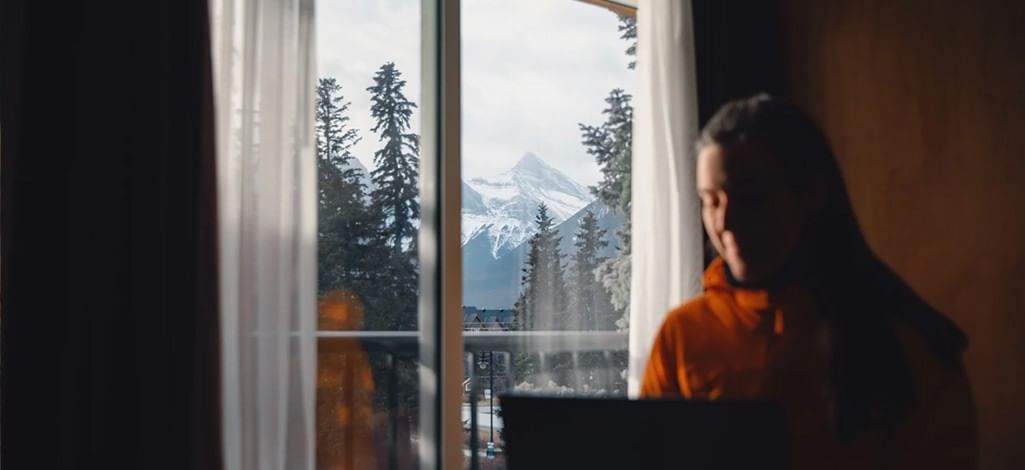
While the shoulder months are quiet and beautiful, they demand some shifts in how we prepare for the summer season. Surfaces switch between ice, slush, and dry ground, and daylight moves faster than one might expect. From sun to rain, sleet to snow, varying conditions can challenge the outdoor enthusiast.
While that can all sound complex, here are some straightforward tips and resources from an ACMG Apprentice Hiking Guide to make the best of your time in the Rockies.
A. Keep updated on trail conditions & weather
There are so many awesome resources that are found easily at your fingertips: from official trail reports to various map and weather apps. Parks Canada updates Banff conditions and closures, including walking trails as well as snowshoeing and cross-country ski trails. Similarly, Alberta Parks covers Kananaskis and the Bow Valley (don’t forget to buy your Kananaskis Conservation Pass online if visiting those areas).
You can also check apps like All Trails for the most recent reviews on trail conditions, as well as expected weather, surface reports and estimated time required for the route. For weather, Environment Canada is great for local forecasts, and sites like Windy and SpotWX are fantastic for more detailed, high-resolution weather, especially for varying elevations.
B. Read the ground, not just the sky
You know how some highways require winter tires after October? You can consider the same policy for your own two feet: always pack a form of traction as we transition from fall to winter.
Combining micro spikes and poles is your best bet for smooth movement on the trails, which experience frequent freeze and thaw cycles throughout the shoulder season. While a trail may seem clear and dirt-covered at the base of a mountain, those ground conditions can quickly change as you gain elevation.
C. Carry the “Ten Essentials” in the backcountry
You may initially think ten items sound like “overkill”, but most of these you likely already carry, and can easily be packed into a toiletry-sized kit that you grab-and-go each time you head out on adventures. These will serve you more than you may think and can get you out of a sticky situation.
- Navigation. Save maps on your phone (AllTrails, Gaia) or watch for offline access. Consider a compact power bank, since phone batteries drain faster in cold temperatures.
- Layers. Ever gotten the chills when you get to a summit, or been surprised by rain when the forecast called for clear skies? Make a habit of never leaving without a waterproof shell, extra insulative layer and warm gloves.
- Snacks. Bring enough for you and a friend… you’ll be their favourite hiking buddy when you whip out bonus snacks (especially if they forget to bring them altogether).
- Hydration. Aim for at least 1L packed, plus a filter or treatment system. Consider that many water sources may be frozen this time of year.
- Sun protection. UV finds you even on overcast days. Sunglasses, sunscreen and hats are great year-round.
- Light. A headlamp with spare batteries; avoid relying on your phone light.
- Basic first aid kit. Bandages and blister kit, important medications, pain and allergy relief.
- Knife or multitool. For repairs or other challenges.
- Fire. Matches, lighter, tinder and/or a stove for hot drinks.
- Shelter. Can be a light and compact emergency bivy sack.
Plus one last rockstar move: always let someone know your plan. Specifically what trail or region you’re heading to, and when you plan to get back. With that, you’re ready to thrive in the beautiful surrounding landscapes.
Travel options to tread lightly

The quiet of shoulder season provides the perfect opportunity to rethink how we move, and staying at the Coast Canmore Hotel & Conference Centre provides the perfect location to access various transit options. Roam Transit connects you to points of interest throughout Canmore, Banff and even Lake Louise with its fleet of eco-friendly hybrid buses. And the best part: rides within Canmore are *free*.
Just steps away from the Coast Canmore Hotel & Conference Centre, you can catch local routes 5C and 12, plus the Canmore-Banff Regional Route 3. Route 3 will take you to the Banff High School Transit Hub, where you can access even more options like Route 1 to Sulphur Mountain and the Banff Gondola, Route 2 to Tunnel Mountain, Route 9 to Johnston Canyon (weekends only during winter schedule) and of course the 8X Lake Louise Express.
The Banff and Lake Louise Routes are very affordable: a single adult ticket to Banff is $6, and a system-wide day pass for adults is $30. You can check the fares here, download the Taken Transit app to load your rides or passes onto your mobile, and use the Transit App for live bus locations and schedules.
If you’re looking for a more active way to see the valley, you can ride the Rocky Mountain Legacy Trail between Canmore and Banff. This paved route is designed for bikes and spans approximately 27 kilometres from Canmore to the park corridor with very gentle elevation. This is a stunning way to combine movement with views and environmental care. You can easily rent bikes and e-bikes in town: check out options like Pedego Electric Bikes and Rundle Bikes which are easily reached by foot or bus from the Coast Canmore Hotel & Conference Centre.
See you here soon
If you’re looking for a sign to visit the Rockies during shoulder season, this is it! Canmore and Banff shine right now, and this is your opportunity to enjoy everything the region has to offer with fewer crowds, quieter trails and beautiful conditions as we shift into winter. With the Coast Canmore Hotel & Conference Centre as your home base, you can explore easily, go car-free and soak in the season with a gentle footprint. Can’t wait to see you here soon.
About the Author
Alex Mack is a Vancouver-based photographer, high altitude physiologist, and ACMG Apprentice Hiking Guide with a deep love for mountain landscapes. She blends science and storytelling to help others explore responsibly and confidently in alpine environments. As a brand ambassador for Arc’teryx BC, Alex shares sustainable adventure tips and high-elevation insights from across Western Canada.